A Halloween yarn palette can be recognisable without using only bright orange and black. Cream softens the contrast, charcoal makes dark stitches easier to inspect, and a small amount of lavender or sage can connect several projects into one display.
Before buying more yarn, separate what you already have by thickness, fibre and care instructions. A colour match is less useful if the yarn behaves very differently from the rest of the project.
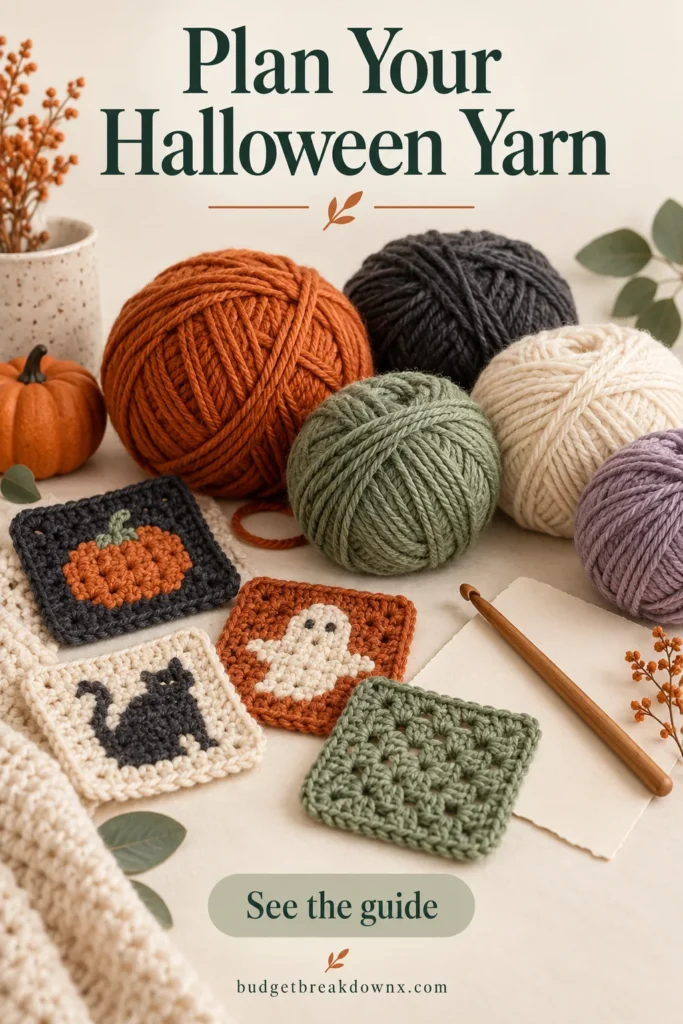
Start with the job the yarn must do
| Project | What to check first |
|---|---|
| Flat applique | Clear stitch definition and manageable weight on its background |
| Stuffed pumpkin or ghost | Fabric dense enough for the intended stuffing and construction |
| Coaster or runner | Flatness, compatible care and colour behaviour after washing |
| Headband | Comfort against skin and recovery after gentle stretching |
| Joined granny squares | Matching dimensions and compatible edge counts |
The Craft Yarn Council’s yarn-weight system groups yarns by broad thickness categories. Use it as a starting reference, then compare actual labels and swatches. A shared category does not guarantee that two yarns will produce identical fabric with one hook.
Choose a palette with a clear main colour
- Classic Halloween: orange, charcoal and cream. Use cream for ghost shapes and small face details.
- Soft autumn: rust, sage and warm cream. Let the orange appear in a few pumpkins or stripes.
- Playful night: lavender, charcoal and pale cream. Keep the light colour for details that need to remain visible.
A 60/30/10 split can be a useful visual starting point: about 60 percent main colour, 30 percent secondary colour and 10 percent accent. It is a design idea, not a yarn-buying formula. Stitch texture, motif shape and the size of each piece determine how much yarn you actually use.
Put small swatches together and view them from a few steps away. If a face disappears, increase the contrast between the embroidery and background. A photograph on a screen may shift the colour, so make the final choice with the yarns in the room where the project will be used.
Estimate a scrap from its label
If a yarn label lists 200 metres per 100 grams, that is 2 metres per gram. A clean 18-gram remainder of that same yarn contains approximately 36 metres: 18 × 2 = 36. The estimate assumes the label’s length-to-weight relationship is representative and the scale reading is reasonably accurate.
Do not apply that ratio to a different yarn simply because the colour or category matches. If the label is missing, record the scrap as an unknown quantity and reserve it for a flexible detail rather than a project that depends on a precise remaining length.
Use a real motif to plan repeats
Make one complete motif with its tails and finishing. Weigh the yarn before and after, or weigh a fully dry finished piece if it contains only that yarn. If one motif uses about 6 grams, eight comparable motifs suggest about 48 grams before allowing for joins, variation and a working reserve.
For a multicolour motif, measure each colour separately if quantities are tight. The orange middle of a candy-corn triangle may use more than the cream tip even when the bands look similar in height, because the lower rows contain more stitches.
Keep substitutions small and recorded
Change one thing at a time when possible: yarn, hook or stitch. If you change all three, it is harder to understand why a square became larger or a brim started waving. Make one finished sample before producing a set for a garland or pillow.
Keep a simple note with the yarn name, fibre, weight, hook size, finished dimensions and care result. Add the amount used if you measured it. That record gives you a practical starting point for the next project without inventing a universal yardage promise.
Use the leftovers where they help
Small contrasting lengths are useful for embroidered eyes, narrow stripes and short stems. Keep enough matching yarn for repairs or final joining before using every last piece. If there is not enough to finish a repeat cleanly, choose a deliberate colour-block change at a row boundary rather than a surprise join in the middle of a face.
Keep making
- Crochet Pumpkin from a Rectangle: Ribbing and Shaping
- Halloween Crochet Granny Squares: Plan a Matching Set
- Halloween Crochet Coasters: A Simple Striped Square
Explore the Halloween crochet collection · Visit the crochet learning library